Karl Blossfeldt – Pioneer of Macro Plant Photography
Karl Blossfeldt was a German photographer, sculptor, teacher, and designer who created some of the most memorable plant images of the early twentieth century. Working with homemade cameras and custom lenses, he captured magnified, razor-sharp details of stems, leaves, and seed pods that most people had never seen before. His photographs bridged science, art, and education and helped define the New Objectivity movement in photography.
Who Was Karl Blossfeldt?
13 June 1865 – 9 December 1932
Close-up plant photography, homemade camera
Art Forms in Nature (Urformen der Kunst, 1928)
Neue Sachlichkeit (New Objectivity), early modernism
- Karl Blossfeldt began his career as a sculptor, which influenced his architecturally framed plant photographs.
- He used a homemade camera that allowed extreme close-ups, revealing structural patterns invisible to the naked eye.
- His work strongly appealed to the Surrealists and early modernists, who admired the abstract forms in his plant studies.
- Despite his popularity, details about his camera and the exact cause of his death remain uncertain or lightly documented.
| Key Facts About Karl Blossfeldt | Details |
|---|---|
| Full Name | Karl Blossfeldt |
| Born | 13 June 1865, Schielo, Germany |
| Died | 9 December 1932, Berlin, Germany |
| Nationality | German |
| Occupation | Photographer, sculptor, teacher |
| Known For | Macro plant photography |
| Art Movement | Neue Sachlichkeit (New Objectivity) |
| Famous Publication | Urformen der Kunst (Art Forms in Nature, 1928) |
| Camera | Homemade bellows camera, possibly using a Zeiss lens |
| Influenced | Surrealists, modern designers, nature photographers |
Blossfeldt was born in Schielo, Germany, on June 13, 1865. He had no formal training as a photographer. His early artistic education was in sculpture and related arts, which he studied in Berlin beginning in 1881. Later he taught at the Unterrichtsanstalt des Kunstgewerbemuseums, the Academy of Decorative Arts in Berlin. Over more than thirty years, he dedicated himself to photographing botanical subjects, building a remarkable archive of plant forms.
What Is Karl Blossfeldt Known For?
Art Forms in Nature (Urformen der Kunst)
Blossfeldt’s best-known book, Urformen der Kunst, was published in 1928. In English it is often called Art Forms in Nature or Fundamental Forms of Art, depending on the translation. The book was originally conceived as a teaching aid and reference source for artists, craftsmen, and architects. It quickly became recognized as a major artistic work in its own right. A later book, Wundergarten der Natur, was published in 1932, shortly before or around the time of his death.
A Teaching Tool That Became Art
The photographs Blossfeldt made were never intended for gallery walls. He created them for his students, to show the structural principles that plants share with architecture and design. Yet the precision and beauty of the images transcended their instructional purpose. Curators and collectors soon saw them as autonomous works of art, and they were exhibited alongside the most avant-garde photography of the era. The title Urformen der Kunst has been translated into English as both Art Forms in Nature and Fundamental Forms of Art. Both versions are used by different museums and publishers, so readers may encounter either title when searching for the book.
What Was Karl Blossfeldt’s Photography Style?
Extreme Sharpness and High Magnification
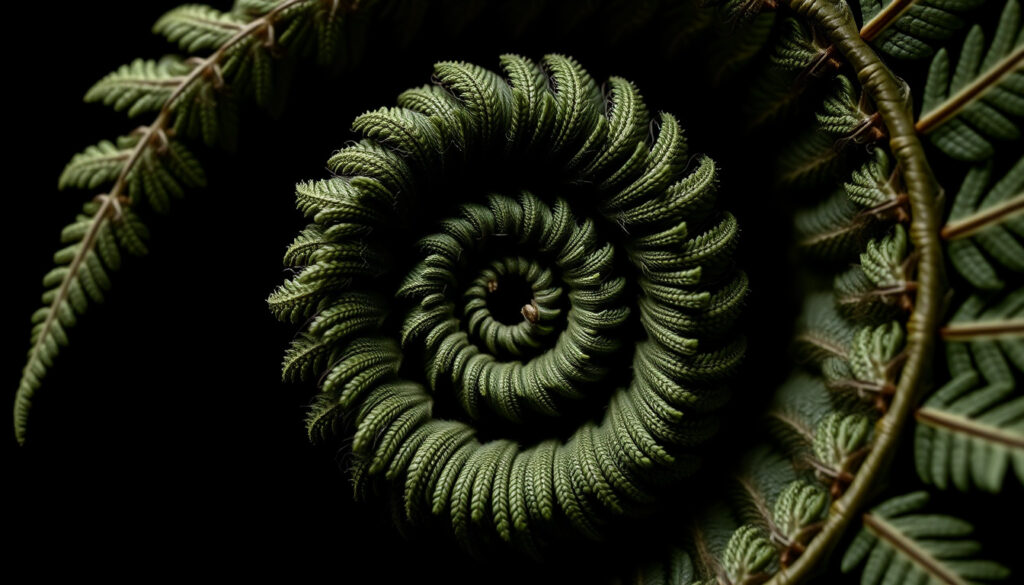
Blossfeldt’s images are characterized by extreme sharpness, close-up framing, and high magnification of plants, twigs, seeds, leaves, and other flora. He typically used plain or neutral backgrounds, direct lighting, and strong frontal presentation to isolate form, symmetry, texture, and structure. The results often resemble scientific illustrations or line drawings in their precision and clarity.
The Homemade Camera System
Standard cameras of the time could not capture the level of macro detail Blossfeldt wanted. To solve this practical problem, he built his own cameras fitted with special lenses. According to Britannica, the lenses could magnify subjects up to 30 times their natural size. Other sources describe home-made lenses or a self-built camera system that enabled unusually detailed botanical close-ups. This equipment was developed specifically for teaching and study, not for artistic production.
Connection to Neue Sachlichkeit (New Objectivity)
Blossfeldt is widely associated with Neue Sachlichkeit, or New Objectivity, a German modernist movement that emphasized objectivity, clarity, and documentary precision. The International Center of Photography describes him as one of the main photographers of the movement, noting that the style rejected painterly softness and personal expression in favor of an objective, scientific use of the camera. Britannica likewise states that his work was a forerunner of New Objectivity photography because it favored sharply focused documentary images. His plant photographs fit the movement’s ideals by presenting subjects plainly, analytically, and without sentimental effect.
Influence on Surrealists and Modernists
Although Blossfeldt approached plants with the eye of a teacher and a scientist, the abstract patterns he revealed resonated strongly with Surrealist and modernist artists. They admired the strange, almost architectural forms that emerged at high magnification. His work thus influenced photography, graphic design, and broader modernist ideas about form found in nature.
How Did Karl Blossfeldt Die?
Blossfeldt died in Berlin on December 9, 1932. He was 67 years old. The precise cause of death is not recorded in most major reference sources. One biographical source, the Shelfist, states that he died of cancer. Because the major reference works—Britannica, Wikipedia, and museum archives—do not all specify a cause, the most accurate statement is that he died in Berlin in 1932, with cancer mentioned by at least one source but not independently verified across the full documentary record. When researching Blossfeldt’s death, note that most authoritative sources (Britannica, Wikipedia, museum pages) give only the date and place. The claim that he died of cancer comes from a single biographical account and is not repeated across the wider scholarly record until confirmed by further evidence.
Details about the exact lens specifications of his homemade camera and the precise circumstances of his death are not universally agreed upon or well documented. Researchers should cross-reference multiple sources before citing these details as established fact.
What Were the Key Events in Karl Blossfeldt’s Life?
- 1865 – Born in Schielo, Germany.
- 1884–1888 – Apprenticeship in sculpture and ironwork.
- 1890s – Studied at the Academy of the Royal Crafts Museum in Berlin.
- 1898 – Began photographing plant specimens using a homemade camera.
- 1923 – Became professor at the Vereinigte Staatsschulen für freie und angewandte Kunst.
- 1928 – Published Urformen der Kunst (Art Forms in Nature).
- 1932 – Died in Berlin on 9 December.
What Is Known and What Remains Uncertain About Karl Blossfeldt?
| Established Information | Information That Remains Unclear |
|---|---|
| Blossfeldt was a German photographer and sculptor. | The exact lens and technical specifications of his camera are not universally agreed upon. |
| He used a homemade camera to take close-up plant photos. | The precise cause of his death is not widely recorded or cited. |
| His book Art Forms in Nature was published in 1928. | How many original negatives survive and where they are housed is not fully cataloged in one place. |
| He taught at the Academy of Decorative Arts in Berlin for many years. | The full extent of his influence on individual students is not well documented. |
Why Does Karl Blossfeldt Matter in Art History?
Karl Blossfeldt bridges sculpture and photography, art and science. His dispassionate, highly detailed images of plant forms—shot with a self-built camera—predate the German New Objectivity movement and later influenced Surrealists, Bauhaus designers, and contemporary nature photographers. His work raises questions about the boundary between artistic intention and scientific documentation. He is now regarded as a defining figure of twentieth-century photography, especially for the intersection of science, pedagogy, and art.
The lack of concrete details about his methods and death only adds to the mystique, but also underscores the need for careful research when citing his biography. Museums and galleries, including the Museum of Modern Art, the International Center of Photography, and the Southbank Centre, continue to preserve and exhibit his work, ensuring that new audiences encounter the strange beauty of his magnified plants.
What Are the Main Sources for Researching Karl Blossfeldt?
“The plant never only vegetates; it builds.”
Attributed to Karl Blossfeldt (exact origin uncertain)
Researchers can consult several authoritative sources for verified information about Blossfeldt’s life and work. The Wikipedia article offers a broad encyclopedic summary. The Museum of Modern Art and the International Center of Photography provide curatorial overviews. The Michael Hoppen Gallery includes biographical and artwork details. The Southbank Centre’s touring exhibition pages add context about how the photographs are displayed today. For anyone studying Blossfeldt, these five institutions represent reliable, publicly accessible starting points.
What Is Karl Blossfeldt’s Lasting Legacy?
Blossfeldt transformed botanical study into a major visual language for modern art and design. His photographs continue to influence photographers, graphic designers, and anyone interested in the hidden geometry of nature. Future research may focus on locating archival materials such as original negatives and teaching notes that could clarify his camera build and the circumstances of his death. Digitization projects by museums like MOMA and the ICP continue to make his work more accessible, and scholars are likely to explore his influence on twenty-first-century trends in botanical photography and biophilic design. For those curious about the natural world and its structural beauty, his images remain an essential reference point. For a broader look at wildlife and natural diets, see What Do Hedgehogs Eat, and for more on flowering plants, read about Evening Primrose Oil Benefits.
Frequently Asked Questions About Karl Blossfeldt
How can I do artist research on Karl Blossfeldt?
Start with academic sources like museum databases (MOMA, ICP) and his book Art Forms in Nature. Use Wikipedia for a quick overview and gallery sites for visual references. Cross-reference biographical details from multiple authoritative sources.
Where can I see Karl Blossfeldt’s photos?
Major museum collections (MOMA, ICP, Berlinische Galerie) hold originals. Online, his work is widely available on gallery websites, Wikipedia, and art archives. The Southbank Centre’s touring exhibition Art Forms in Nature also displays prints.
Why is Karl Blossfeldt considered a pioneer?
He used a homemade camera to achieve extreme macro perspectives of plants at a time when such technology was not commercially available. His images revealed structural beauty in nature that influenced art and design.
Is there a complete collection of his photographs?
No single complete collection exists, but many are held by institutions. His estate is managed by various archives. Art Forms in Nature contains 120 plates but is not exhaustive.
Did Blossfeldt consider himself an artist?
He saw himself primarily as a teacher and sculptor. His photographs were created as teaching aids, not as art. Only later did the art world reclassify them as modernist works.
What kind of plants did Blossfeldt photograph?
He photographed a wide range of flora, including stems, leaves, seed pods, twigs, buds, and entire plants. Common subjects included horsetails, ferns, ivy, and other wild plants found in and around Berlin.
How long did Blossfeldt work on botanical photography?
He worked on botanical subjects for more than thirty years, with some sources specifying roughly thirty-five years dedicated to photographing plants.
What movement is Blossfeldt associated with?
He is most closely associated with Neue Sachlichkeit (New Objectivity), a German modernist movement that valued clarity, objectivity, and documentary precision in photography.
More related posts
 Chathill Detached Bungalow Sea Views – Complete Buying Guide
 Pound to Pakistani Rupee Rate Today – Live Rates and Comparisons
 Uruguay National Football Team – History, Bielsa and 2026 Prospects
 Fourth Wing TV Show – Amazon Adaptation Status
 Caoimhin Kelleher – Irish Goalkeeper Profile, Stats, and Transfer
 Guy Ritchie’s The Covenant – Cast, Where to Watch, True Story
 Words With No Vowels – Complete Lists and Guide
 UK Bank Cash Withdrawal Changes – Over 65s ATM Limits 2024