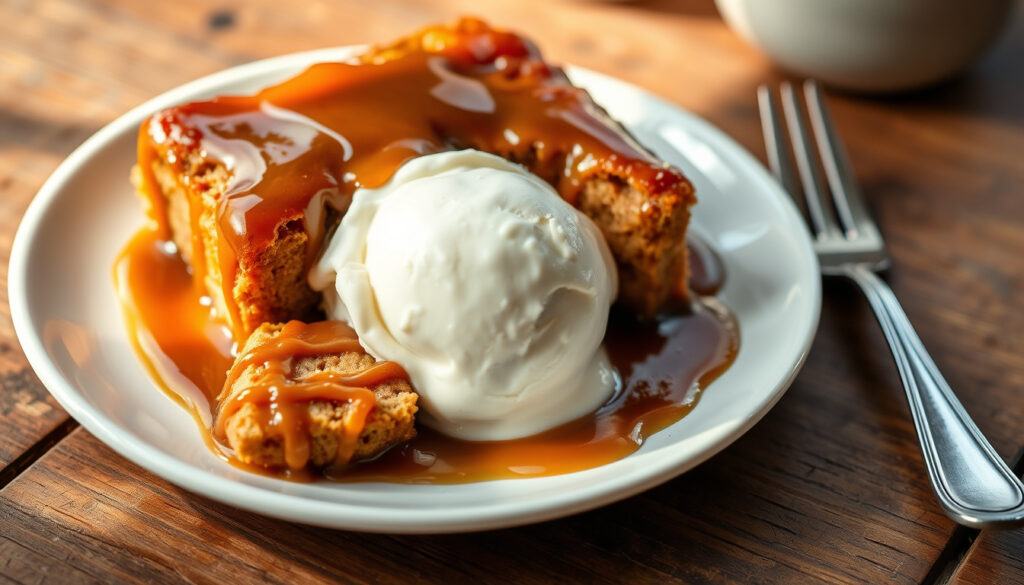
Mary Berry Sticky Toffee Pudding – Easy No-Date Recipe
Mary Berry’s sticky toffee pudding has become one of the most searched dessert recipes in British baking. Known for its sticky, gooey texture and rich butterscotch sauce, this version skips the traditional dates and uses a simpler all-in-one method. The recipe, featured on BBC Food and demonstrated on Mary Berry Everyday, offers home cooks a reliable alternative to more complex versions.
What sets this pudding apart is not just what it leaves out, but how it brings together everyday ingredients to create something that feels special. The sauce, made with butter, brown sugar, and cream, is poured over the warm sponge and served with ice cream or cream. It is a dessert built for convenience without sacrificing the sticky, comforting qualities people expect.
The recipe sits within a broader tradition of sticky toffee pudding that dates back several decades. Mary Berry’s interpretation has earned a devoted following precisely because it makes the dessert accessible to cooks of all skill levels, while still delivering the rich sweetness that defines the category.
How to Make Mary Berry’s Sticky Toffee Pudding?
- Mary Berry’s sticky toffee pudding skips the traditional dates, using golden syrup for sweetness and moisture, making it lighter and more accessible.
- The ‘all-in-one’ method mixes all ingredients in a single bowl before baking – a time-saving technique endorsed by Mary Berry herself.
- The accompanying butterscotch sauce is a key element, often made with butter, brown sugar, and cream.
- This recipe is frequently compared to Nigella Lawson’s version, which uses chopped dates and a darker, richer texture.
- User reviews praise its simplicity and reliable results, making it a go‑to recipe for British dinner parties.
| Attribute | Detail |
|---|---|
| Also Known As | Mary Berry’s All‑in‑One Sticky Toffee Pudding |
| Main Sweetener | Golden syrup (no dates) |
| Baking Dish | Large shallow ovenproof dish |
| Serving Suggestion | Vanilla ice cream or pouring cream |
| Featured On | BBC Food, Mary Berry Everyday (TV series) |
| Make Ahead | Yes – can be baked a day ahead; reheat gently |
| Freezing | Yes – sponge freezes well; sauce best fresh |
Mary Berry vs Nigella: Which Sticky Toffee Pudding is Better?
The debate between Mary Berry’s and Nigella Lawson’s sticky toffee pudding is one of the most discussed topics in British home baking. According to a detailed comparison by SilverSpoon, the single biggest difference comes down to one ingredient: dates. Nigella uses soaked dates as the foundation of her sponge, while Mary Berry builds her version around treacle and sugar. That choice changes the texture, colour, and overall experience of the dessert.
Texture and Richness
The SilverSpoon comparison described Nigella’s pudding as darker, richer, more intense, and with a thicker, more decadent sauce. It was judged more obviously ‘sticky’ in texture. Mary Berry’s pudding was still sweet and pleasant, but the sauce was considered less luscious and sticky by comparison. The vanilla in Mary’s sauce was not especially noticeable because the sweetness dominated.
Which One Is More Authentic?
Sticky toffee pudding is a dessert where authenticity is debated. Some people consider dates essential to the classic dish, while others accept a date-free treacle sponge as a valid version. Nigella’s style is closer to what many people regard as the classic modern sticky toffee pudding, originally popularised by the Sharrow Bay Country House Hotel in the Lake District. Mary Berry’s version is simpler, faster, and very approachable, but less date-forward.
If you want a quick, easy pudding that uses everyday ingredients, Mary Berry’s all-in-one method is the reliable choice. If you prefer a darker, richer dessert with a deeper caramel flavour from dates, Nigella’s recipe will likely satisfy more. Both are freezer-friendly and can be made ahead.
Can Mary Berry’s Sticky Toffee Pudding Be Made Ahead?
Yes, and this is one of the reasons the recipe has become so popular. The sponge can be baked in advance, cooled completely, and stored tightly covered until needed. The sauce can also be prepared ahead and reheated gently before serving.
Best Make-Ahead Strategy
Bake the sponge ahead of time, cool it completely, and cover it tightly. When you are ready to serve, reheat it gently. The sauce can be made ahead too. Reheat it slowly in a saucepan or microwave. If it thickens too much, loosen it with a splash of cream or milk.
Freezing the Sponge and Sauce
Sticky toffee pudding is a very freezer-friendly dessert. The sponge should be cooled completely, wrapped well, and stored in an airtight container. It will keep for about one to three months for best quality. The sauce also freezes well. Cool it fully before freezing, then reheat gently and whisk until smooth again. For the best texture, freeze the sponge and sauce separately.
Storage and Reheating
According to the recipe details, the cake can be kept for up to three days. At room temperature, storage is fine only for short periods if the kitchen is cool and the dessert is well covered. The refrigerator is safer for longer storage, especially if the sauce contains cream. When reheating, let the pudding come toward room temperature first or warm it gently so it does not taste dense. The best results come from reheating the sponge and sauce separately, then pouring warm sauce over the pudding just before serving.
What Makes Mary Berry’s Sticky Toffee Pudding So Easy?
The all-in-one method is the key. Instead of creaming butter and sugar separately, then folding in flour in stages, the recipe puts all the sponge ingredients into a single bowl and beats them together. This technique, demonstrated in the Mary Berry Everyday television series, dramatically reduces the time and effort required. The ingredients typically include butter, sugar, eggs, self-raising flour, baking powder, bicarbonate of soda, milk, and black treacle.
Mary Berry’s version deliberately omits dates. Instead, golden syrup and black treacle provide the sweetness and moisture that dates would normally contribute. This not only simplifies the ingredient list but also creates a lighter sponge that many home cooks find more forgiving.
The butterscotch sauce is equally straightforward. Butter, light brown sugar, black treacle, double cream, and vanilla extract are brought to a brief boil on the stove. Half the sauce is poured over the warm pudding, and the rest is reserved for serving. This approach keeps the pudding moist and sticky without drowning it immediately.
No official gluten-free version of Mary Berry’s sticky toffee pudding exists. Replacing self-raising flour with a gluten-free blend may work, but it has not been tested or endorsed by Mary Berry. The texture could differ, and liquid adjustments may be necessary.
How Did Sticky Toffee Pudding Become a British Classic?
- 1970s–80s: Sticky toffee pudding gains popularity in British restaurants, originally served at the Sharrow Bay Country House Hotel in the Lake District. The original recipe uses chopped dates.
- 2000s: Mary Berry begins featuring sticky toffee pudding in her cookbooks and TV shows, creating her own no‑date version that simplifies the method.
- 2017: Mary Berry’s ‘All‑in‑One’ sticky toffee pudding is demonstrated on BBC Two’s Mary Berry Everyday, bringing the recipe to a wider audience.
- Present: The BBC recipe remains one of the most searched sticky toffee pudding variations online, often compared to other celebrity chef versions such as Nigella Lawson’s, Paul Hollywood’s, and James Martin’s.
Does Mary Berry’s Recipe Contain Dates? Clearing Up Common Uncertainties
| Established Information | Information That Remains Unclear |
|---|---|
| Mary Berry’s published recipe does not use dates. Golden syrup provides sweetness and moisture. | Whether you can successfully substitute dates in Mary Berry’s method. The recipe is designed without dates, and adding them may alter texture and require liquid adjustments. |
| Mary Berry’s version is a variation of the classic sticky toffee pudding. The original, from the Lake District, uses chopped dates. | Whether Mary Berry’s recipe can be made gluten-free. No official gluten-free version exists, and the substitution has not been tested by Mary Berry. |
| Mary Berry’s sauce is butterscotch-style, made with butter, brown sugar, treacle, cream, and vanilla. | Whether the recipe works with dairy-free substitutes. The official recipe uses butter and cream; plant-based alternatives have not been endorsed. |
Why Does Mary Berry’s Version Stand Out?
Mary Berry’s sticky toffee pudding occupies a unique space in British baking. It retains the comforting ‘sticky’ identity of the classic dessert while dramatically simplifying the process. By removing dates and adopting an all-in-one mixing method, she lowers the barrier for home cooks who may not have specialty ingredients or advanced techniques. This recipe fits into Mary Berry’s broader culinary philosophy of family-friendly, reliable, and achievable cooking.
In comparison to Nigella Lawson’s equally popular version, which embraces dates and a more indulgent texture, Mary Berry’s pudding is lighter, quicker, and less prone to failure. The widespread BBC Food endorsement adds a layer of trust that has made this recipe a staple in UK homes. The official Mary Berry Facebook page has also promoted the recipe, describing it as sticky, gooey, and surprisingly light and easy.
What Do the Sources Say About Mary Berry’s Sticky Toffee Pudding?
“Sticky, gooey and remarkably easy, Mary Berry’s no-date sticky toffee pudding is a winner.”
— BBC Food (Mary Berry’s recipe page)
“Mary’s all-in-one sticky toffee pudding is sticky, gooey and surprisingly light and easy.”
— Mary Berry’s Facebook post (official page)
“Mary Berry’s recipe is lighter and quicker; Nigella’s is richer and more traditional.”
— SilverSpoon comparison article
What’s Next After Mastering Mary Berry’s Sticky Toffee Pudding?
Once you have the basics down, you can explore other variations and techniques. Try Mary Berry’s sticky toffee pudding with a salted caramel twist, or explore other Mary Berry pudding recipes such as bread and butter pudding or lemon tart. You could also attempt the original Lake District sticky toffee pudding for a direct comparison, or experiment with gluten-free or vegan adaptations. If you enjoyed the all-in-one method, you might also like Mary Berry’s Simple Sponge Cake Recipe for another reliable, no-fuss bake. For a wider selection of classic British desserts, browse Best British Desserts: A Collection of Mary Berry Favorites.
Frequently Asked Questions
Can I make Mary Berry’s sticky toffee pudding dairy‑free?
The official recipe uses butter and cream. Substituting dairy‑free alternatives (e.g., plant‑based butter, oat cream) may work but has not been endorsed by Mary Berry.
Why does my sticky toffee pudding sink in the middle?
Common causes: oven temperature too low, batter overmixed, or too much liquid. Ensure ingredients are at room temperature and follow the baking time exactly.
What is the best way to reheat Mary Berry’s sticky toffee pudding?
Cover with foil and reheat in a moderate oven (160°C) for 10–15 minutes, or microwave individual portions on low power.
How long does Mary Berry’s sticky toffee pudding keep?
The sponge can be stored in an airtight container for up to 3 days. The sauce is best used fresh or refrigerated separately for up to a week.
Does Mary Berry’s recipe use self‑raising flour?
Yes, the BBC recipe specifies self‑raising flour for a light sponge.
More related posts
 Leonard Cohen – Biography Famous Songs and Lasting Legacy
 Google Nest Hub Max – Still Worth Buying in 2025
 Is UK Going to War – Fact-Based Threat Assessment 2026
 Anna-Maria Sieklucka – Age, Height, Boyfriend and 365 Days Facts
 Which Size of Fibroid Is Dangerous – mm, cm, and NHS Guidelines
 Sonic the Hedgehog 3 – Cast, Box Office and Release Guide
 What Is a Rainbow Baby – Definition, Meaning, and Debate
 The Man in the Iron Mask – True History and Identity Facts