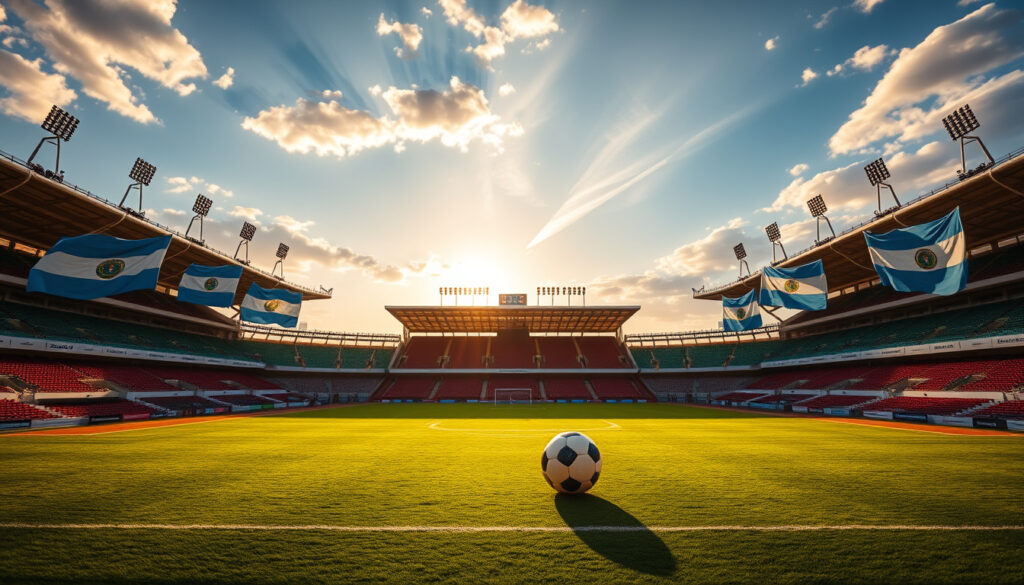
Uruguay National Football Team – History, Bielsa and 2026 Prospects
The Uruguay national football team stands as one of the most storied programs in international football, having secured World Cup glory twice and dominated South American competitions for decades. Now under the guidance of Argentine manager Marcelo Bielsa since May 2023, La Celeste continues to compete among the world’s elite sides, combining seasoned veterans with emerging talent as they pursue qualification for the 2026 FIFA World Cup.
Known affectionately as La Celeste (The Sky Blue) or Los Charrúas, Uruguay’s national team has cultivated a reputation built on tactical discipline, passionate performances, and an unwavering winning mentality. The squad currently holds the 17th position in the FIFA World Rankings with 1673 points, reflecting consistent competitiveness in continental and global competitions.
This profile examines the team’s coaching leadership, decorated achievements, current squad composition, and the path toward the 2026 World Cup in North America.
La Celeste
17th (1673 pts)
2 (1930, 1950)
15 titles
Who is the coach of the Uruguay national football team?
Marcelo Bielsa assumed command of the Uruguay national team on May 15, 2023, succeeding Diego Alonso and Marcelo Broli in one of international football’s most prestigious managerial positions. The Argentine tactician, aged 70, brings decades of experience from club competitions across South America and Europe, most notably successful tenures with Athletic Bilbao, Marseille, and the Chilean and Argentine national teams.
Coaching Staff and Tactical Approach
Bielsa’s support staff includes assistant coaches Pablo Quiroga and Diego Reyes, with Enzo Ferrari serving as the goalkeeping coach. This technical team inherited a squad that had experienced early difficulties under previous management, subsequently steering the program through a period of recovery and renewed confidence.
During his tenure spanning 35 to 36 matches, Bielsa has achieved a win rate between 47 and 49 percent, accumulating approximately 1.75 to 1.77 points per game. The Argentine manager is known for implementing a high-intensity attacking philosophy, deploying the team in a dynamic 4-3-3 formation that emphasizes pressing, vertical passing, and positional flexibility.
- Bielsa appointed on May 15, 2023, replacing Diego Alonso and Marcelo Broli
- 47-49% win rate across 35-36 international matches
- High-intensity 4-3-3 tactical system with aggressive pressing
- Staff includes Pablo Quiroga, Diego Reyes, and goalkeeping coach Enzo Ferrari
- Led the team through post-appointment rebuilding phase
- High expectations for 2026 World Cup campaign without veteran striker Luis Suárez
| Fact | Details |
|---|---|
| Founded | 1900 (AUF member) |
| Home Stadium | Estadio Centenario (60,235 capacity) |
| Head Coach | Marcelo Bielsa (Argentina) |
| Captain | José María Giménez (defender) |
| FIFA Ranking | 17th (1,673 points) |
| First International | 1902 |
The squad features 28 players with an average age of 27.9 years, combining experienced campaigners with promising young talents who have emerged through Uruguay’s productive youth development system.
How many World Cups has Uruguay won?
Uruguay has claimed the FIFA World Cup title on two occasions, cementing its status among football’s traditional powers. These victories represent foundational moments in the sport’s history, occurring during the tournament’s formative years.
1930 World Cup – Inaugural Triumph
The first FIFA World Cup took place in Uruguay in 1930, with La Celeste serving as tournament hosts. The national team navigated a condensed format to reach the final, where they defeated Argentina 4-2 in a contested match held at Montevideo’s Estadio Centenario. This victory established Uruguay as the world’s premier footballing nation and validated the country’s decades-long dominance of South American competition.
1950 World Cup – The Maracanazo
Twenty years after their inaugural triumph, Uruguay achieved what many consider the most dramatic result in World Cup history. Facing Brazil at the Maracanã stadium in Rio de Janeiro, a venue filled with over 200,000 spectators expecting a Brazilian victory, Uruguay executed a stunning comeback to win 2-1. This result, known as the Maracanazo, remains one of international football’s most celebrated upsets and solidified Uruguay’s place among the sport’s elite nations.
Beyond their two championship victories, Uruguay secured fourth-place finishes in 1954, 1970, and 2010. The 2010 campaign under Óscar Tabárez marked the team’s most recent deep tournament run, reaching the semi-finals before being eliminated by Germany.
Copa América Success
Uruguay’s Copa América record stands as the most impressive in South American football history, with 15 tournament victories spanning from the competition’s early editions through 2011. The team captured six of the first twelve Copa América titles prior to the inaugural World Cup, establishing an early monopoly on continental honors.
The most recent Copa América triumph came in 2011, ending a 16-year drought since their previous victory in that competition. Led by Luis Suárez, Edinson Cavani, and Diego Forlán, the squad delivered a dominant performance throughout the tournament, defeating Paraguay in the final to reclaim continental supremacy. Suárez was recognized as the tournament’s Player of the Tournament for his exceptional performances.
Olympic Achievements
Uruguay has secured four Olympic gold medals in football, winning the tournament at the 1924 and 1928 Olympic Games. These victories contributed to an era of international dominance that preceded the establishment of the World Cup as football’s premier global competition.
What is the current FIFA ranking of Uruguay national football team?
As of the latest FIFA World Rankings, Uruguay occupies the 17th position with 1,673 points. This ranking reflects the team’s consistent performances across major competitions and qualifying campaigns, positioning La Celeste as a top-tier South American side alongside regional rivals Brazil and Argentina.
World Cup Qualifying Campaign
Uruguay’s qualification campaign for the 2026 FIFA World Cup has demonstrated the team’s resilience and competitive depth. Following initial adjustments under the new coaching regime, the squad has produced a strong second half to the qualifying schedule, registering victories against established continental powers.
The team secured a notable home victory against Brazil and achieved a significant away win against Argentina, results that have placed Uruguay in a strong position for automatic qualification. The most recent qualifier saw Uruguay hold Bolivia to a 0-0 draw on March 25, 2026, maintaining their points total and competitive standing.
A concerning result came in a friendly match where the United States defeated Uruguay 5-1, highlighting the challenges the squad has faced during the transition period under new coaching leadership. However, subsequent performances in official qualifiers have demonstrated improved consistency and defensive organization.
2026 World Cup Prospects
The 2026 FIFA World Cup, co-hosted by the United States, Canada, and Mexico, represents a significant target for Uruguay’s current generation. With the squad expected to compete without longtime striker Luis Suárez, the team will rely on emerging talents and the tactical framework established by Marcelo Bielsa to navigate a challenging tournament draw.
Upcoming fixtures include a World Cup qualifier against Paraguay on June 5, 2026, followed by a group stage match against Saudi Arabia on June 15, 2026. A friendly match against England on March 27, 2026, offers additional preparation opportunities against high-quality international opposition.
Who are the star players in the Uruguay national football team?
Uruguay’s squad combines decorated veterans who have defined the nation’s recent footballing era with promising young talents representing the next generation of La Celeste stars. The balance between experience and youth has become a defining characteristic of Uruguay’s approach under Marcelo Bielsa’s leadership.
Team Captain and Defensive Leadership
José María Giménez serves as team captain, leading the defensive line with his physical presence, aerial ability, and tactical awareness. The central defender has accumulated extensive international experience and anchors a backline that has shown improved organization under Bielsa’s system. Giménez’s leadership extends beyond defensive duties, providing vocal communication and organizational guidance throughout matches.
Attacking Talents
Darwin Núñez has emerged as Uruguay’s leading attacking threat during World Cup qualifying, finishing as the tournament’s top scorer with five goals. His pace, movement, and finishing ability have made him a central figure in Bielsa’s forward line, offering different characteristics from the veteran strikers who defined previous campaigns.
Federico Valverde has contributed two goals during qualifying, demonstrating his box-to-box abilities and capacity for decisive contributions in crucial moments. The midfielder combines technical skill with physical intensity, fitting naturally into Bielsa’s demanding tactical requirements.
Luis Suárez, historically Uruguay’s most prolific striker and the 2011 Copa América Player of the Tournament, is not expected to feature in the 2026 World Cup squad. His absence represents a significant transition for the attacking line, placing increased responsibility on emerging forwards like Darwin Núñez.
Supporting Cast
Nicolás de la Cruz has contributed three goals and three assists during the current cycle, establishing himself as a creative force in the midfield. Maximiliano Araújo has provided three assists from wide positions, offering service to the central forwards. Defensive midfielder Manuel Ugarte has excelled in duels, winning 87 challenges during competitive matches, providing the defensive shield necessary for Bielsa’s aggressive full-back positioning.
Other notable squad members include Edinson Cavani, Ronald Araújo, Brian Rodríguez, and Agustín Canobbio, with the roster further populated by goalkeepers Fernando Muslera, Sergio Rochet, and Santiago Mele, along with defenders Ronald Araújo, Guillermo Varela, Matías Viña, Joaquín Piquerez, Mathías Olivera, Puma Rodríguez, Santiago Bueno, Sebastián Cáceres, and Juan Manuel Sanabria.
What is the nickname and history of the Uruguay national football team?
The Uruguay national football team carries the nickname La Celeste (The Sky Blue), referring to the distinctive light blue color of their home kits. An alternative designation, Los Charrúas, honors the indigenous Charrúa people who inhabited the region before European colonization. These names encapsulate both the team’s visual identity and cultural heritage.
Origins and Early Development
The Asociación Uruguaya de Fútbol (AUF) was established in 1900, with the national team playing its first official international match in 1902. During the early twentieth century, Uruguay emerged as South America’s dominant footballing nation, winning six of the first twelve Copa América tournaments held between 1916 and 1930.
Home games are hosted at Estadio Centenario in Montevideo, a stadium with a capacity of 60,235 that served as the primary venue for the 1930 World Cup. The stadium’s significance in football history, combined with passionate home support, creates a formidable atmosphere for visiting teams.
Modern Era and Notable Coaches
Óscar Tabárez led the national team from 2006 to 2021, accumulating the most matches coached for a single nation in football history. His tenure coincided with a period of renewed success, including the 2010 World Cup semi-final appearance and the 2011 Copa América triumph. Tabárez implemented a structured youth development philosophy that produced several generations of talented players.
The subsequent coaching transition brought Diego Alonso and Marcelo Broli before Marcelo Bielsa’s appointment in May 2023, initiating a new tactical era characterized by high pressing and attacking intensity. Bielsa’s philosophy represents a significant departure from Uruguay’s traditionally more conservative approaches, requiring player adaptation and producing mixed early results.
Key Moments in Uruguay Football History
- 1900 – Asociación Uruguaya de Fútbol founded; national team program established
- 1916 – First Copa América participation; beginning of early continental dominance
- 1930 – Hosts and wins inaugural FIFA World Cup in Montevideo
- 1950 – Maracanazo: Defeats Brazil 2-1 at Maracanã to claim second World Cup
- 2010 – Reaches World Cup semi-final under Óscar Tabárez
- 2011 – Wins Copa América, defeating Paraguay in final
- 2023 – Marcelo Bielsa appointed head coach
- 2026 – Competing in World Cup qualifiers ahead of North American tournament
What is certain and what remains unclear about Uruguay’s current situation?
| Established Information | Ongoing Uncertainty |
|---|---|
| Marcelo Bielsa appointed head coach on May 15, 2023 | Final squad composition for 2026 World Cup not yet confirmed |
| Uruguay has won 2 World Cups (1930, 1950) | Luis Suárez’s international retirement timeline remains unconfirmed |
| Current FIFA ranking: 17th with 1,673 points | Potential impact of injuries on key players ahead of tournament |
| José María Giménez serves as team captain | Draw allocation and group stage opponents for 2026 World Cup |
| Copa América record: 15 tournament victories | Long-term tactical evolution under Bielsa system |
| Estadio Centenario serves as home venue | Potential role of emerging talents in senior setup |
Understanding Uruguay’s Place in Football History
Uruguay’s footballing identity has been shaped by its position as a relatively small nation that achieved outsized success through superior organization, tactical intelligence, and collective commitment. The country’s population of approximately 3.5 million people has consistently produced teams capable of competing against and defeating nations with significantly larger player pools.
This context makes Uruguay’s achievements particularly remarkable in football history. The rivalry with Brazil and Argentina has driven continuous improvement, while the passionate support at Estadio Centenario provides a genuine home advantage. The combination of historical prestige and current competitiveness keeps Uruguay among the sport’s most respected nations.
Marcelo Bielsa’s appointment represents a philosophical evolution for a program that has traditionally prioritized defensive structure and tactical discipline. His high-intensity approach requires different player attributes and has produced inconsistent early results, but the long-term trajectory suggests potential for continued success if the tactical transition continues positively.
For readers interested in comparing international football structures across different nations, our analysis of Scunthorpe United F.C. – National League Status and History provides context on how different countries organize their football hierarchies.
Summary
The Uruguay national football team represents one of international football’s most successful and storied programs, having won the FIFA World Cup twice and accumulated 15 Copa América titles across its history. Currently coached by Argentine Marcelo Bielsa since May 2023 and captained by José María Giménez, the squad holds 17th position in the FIFA rankings with 1,673 points. Star attackers Darwin Núñez, Federico Valverde, and other emerging talents lead an attacking line that must compensate for the anticipated absence of veteran Luis Suárez. With strong World Cup qualifying results including victories over Brazil and Argentina, Uruguay enters the 2026 tournament in North America as a legitimate contender. Those seeking additional tactical analysis may find our Elche CF vs Real Madrid Lineups – Confirmed XI and Team News coverage informative for comparative football analysis.
Frequently Asked Questions
When did Uruguay last win the Copa América?
Uruguay won their most recent Copa América in 2011, defeating Paraguay 3-0 in the final. This victory ended a 16-year drought since their previous tournament win.
What is the nickname of the Uruguay national football team?
The team is nicknamed La Celeste (The Sky Blue), referring to their distinctive light blue kit color. They are also called Los Charrúas, honoring the indigenous people of Uruguay.
Who is the captain of Uruguay?
José María Giménez, a central defender, serves as team captain. He assumed the role following the international retirement of previous captain Diego Godín.
What stadium does Uruguay use for home matches?
The national team plays home matches at Estadio Centenario in Montevideo, which has a capacity of 60,235 and hosted the 1930 World Cup final.
How many Olympic gold medals has Uruguay won in football?
Uruguay has won four Olympic gold medals in football, claiming tournament victories at the 1924 and 1928 Olympic Games.
Who are Uruguay’s biggest rivals?
Argentina and Brazil represent Uruguay’s primary footballing rivals. Matches against these regional powers carry significant historical and competitive importance in South American football.
What tactical formation does Marcelo Bielsa use?
Marcelo Bielsa employs a high-intensity 4-3-3 formation emphasizing aggressive pressing, vertical passing, and positional interchange among attacking players.
How many World Cups has Uruguay played in?
Uruguay has participated in numerous World Cups throughout history, winning in 1930 and 1950 while achieving fourth-place finishes in 1954, 1970, and 2010.
More related posts
 Antique Brass Door Handles – Complete Buyer’s Guide 2025
 Boots Ear Wax Removal Near Me – £60 Microsuction Guide
 Leonard Cohen – Biography Famous Songs and Lasting Legacy
 How to Get Rid of a Cold in 24 Hours – What Doctors Recommend
 Miley Cyrus – 2025 Album Something Beautiful and Career Highlights
 Pound to Pakistani Rupee Rate Today – Live Rates and Comparisons
 Joely Richardson Movies and TV Shows – Complete Guide to Her Career
 When Does US Stock Market Open UK Time – Exact GMT and BST Hours